
You have not yet added any article to your bookmarks!
Join 10k+ people to get notified about new posts, news and tips.
Do not worry we don't spam!
Post by : Badri Ariffin
Early Wednesday, the U.S. military launched its 11th consecutive night of airstrikes targeting Iran, coinciding with escalating violence across the Middle East and stagnating diplomatic resolutions aimed at ceasing hostilities.
This latest round of military action has seen tensions ripple beyond Iran’s borders, disrupting shipping routes and affecting regional allies and global oil markets. Concurrently, Pakistan has been actively urging both parties to resume discussions following the breakdown of a previous ceasefire.
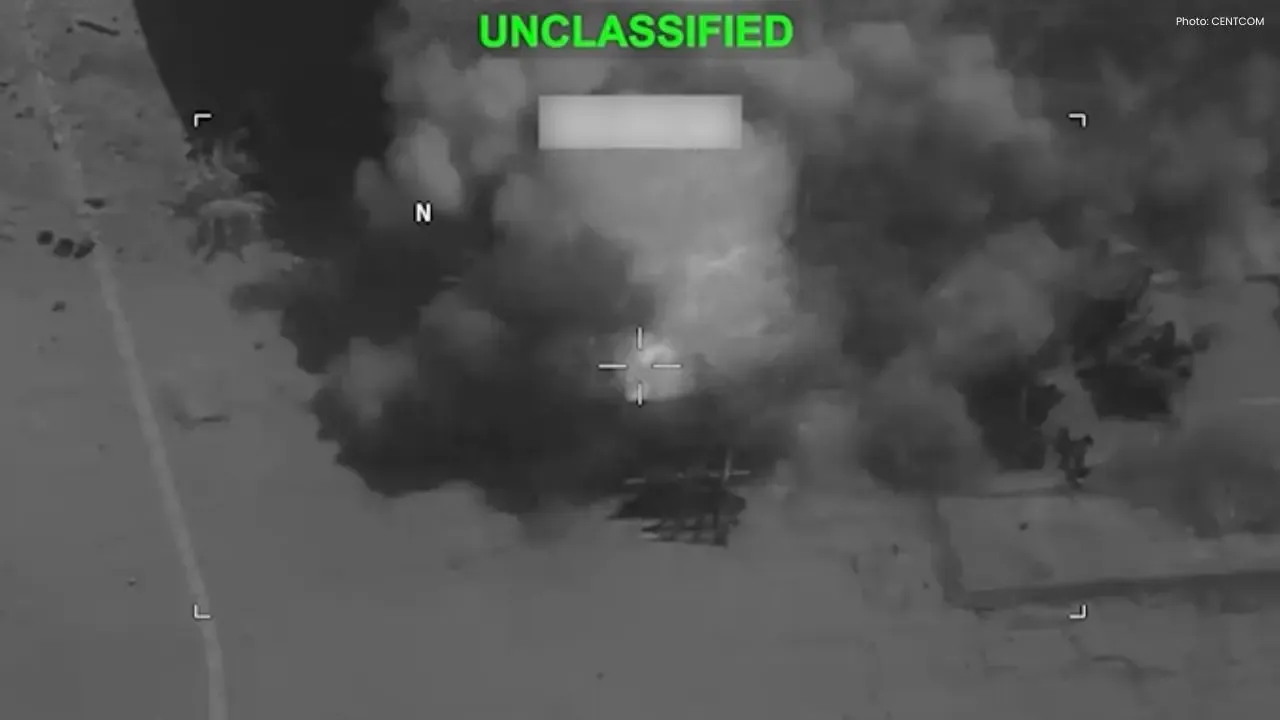
The U.S. Central Command (CENTCOM) remarked that the recent strikes were focused on aircraft hangars and drone storage sites within Iran. This uptick in military operations follows U.S. President Donald Trump’s remarks suggesting a more aggressive approach against Iranian assets.
During an address on Tuesday, Trump stated that the U.S. had "no interest in meeting" with Iranian representatives at this time, and hinted at possible actions against fortified sites near Pickaxe Mountain, close to a significant uranium enrichment facility.
Prior to these strikes, Iranian Interior Minister Eskandar Momeni visited Pakistan, which has taken on a mediating role in the ongoing conflict.
Momeni reportedly met with Pakistan’s Army Chief Field Marshal Asim Munir and later had discussions with Prime Minister Shehbaz Sharif. Sharif publicly conveyed serious concerns regarding the heightened tensions and called for restraint from all involved parties to prevent further destabilization.
Pakistan’s leadership, alongside Field Marshal Munir, had a pivotal role in negotiating last month’s interim agreement between the U.S. and Iran, and continues to seek a renewal of dialogue, despite no new agreements being announced.
The current hostilities increasingly revolve around control of the Strait of Hormuz, a critical energy shipping lane.
Despite ongoing airstrikes, Iran has maintained firm control over this vital waterway, which transports about 20% of the world’s crude oil and natural gas.
With negotiations at a standstill, both sides continue targeting civilian infrastructure throughout the region, compromising the safety of millions.
Amid the ongoing conflict, Iran experienced extensive airstrikes early Wednesday, with defense mechanisms activated near Tehran.
Iran’s state-owned media reported blasts within Bushehr, East Azerbaijan, Hamadan, Hormozgan, Khuzestan, and Sistan and Baluchistan provinces.
These strikes followed an Iranian operation that targeted a tanker in the Strait of Hormuz, compelling the crew to abandon ship.
Iran has also escalated its attacks on U.S. allies in the region, specifically targeting Bahrain, Jordan, and Kuwait.
The intensifying conflict has led to an increase in global energy prices.
On Wednesday, crude oil reached an international benchmark price of over $92 per barrel, with regular gasoline prices in the U.S. climbing to $4 per gallon.
Concerns about global oil supply disruptions have heightened due to the strained circumstances in the Strait of Hormuz.
A U.S. official disclosed to The Associated Press that the number of injured military personnel in the conflict with Iran exceeds 500 troops, surpassing the Pentagon's identified total of 482 wounded.
This discrepancy arises from delays in the reporting system, which are not attributed to any efforts to withhold information.
In Yemen, Iran-aligned Houthi rebels have widened the scope of the conflict, enacting a naval blockade against Saudi Arabia in the Red Sea.
This blockade threatens additional routes instrumental for global oil transport. With shipping already strained in the Strait of Hormuz, Saudi Arabia has been utilizing a pipeline to send oil to the Red Sea for export.
The Houthi-run SABA news agency reported on Tuesday that six vessels had altered their courses following warnings from the group, although The Associated Press was unable to confirm these claims immediately.
Three unnamed Houthi officials mentioned that international shipping companies were cautioned against traversing the Bab el-Mandeb Strait, at the southern entrance to the Red Sea.
Trump reiterated that Iranian officials seek dialogue but stated that the U.S. would only engage if talks demonstrated significance.
Iran's military has reacted strongly, asserting that any attacks on nuclear facilities or critical sites would be considered severe escalation, as reported by state media.
Tensions remain high. Iran faced attacks unexpectedly in June 2025 and again in February while negotiations about its nuclear program were underway.
Subsequent to these attacks, a temporary agreement foundered as Iran resumed hostilities against shipping in the Strait, despite the deal mandating its reopening.
The United Kingdom Maritime Trade Operations (UKMTO) center reported that a tanker was attacked early Tuesday in the Strait of Hormuz, compelling the crew to evacuate the vessel.
Iran's paramilitary Revolutionary Guard claimed responsibility for this incident alongside two additional attacks from the previous day in the same area.
The U.S. military has recommended routes near Oman’s coastline for commercial vessels to minimize their vulnerability to Iranian influence.
CENTCOM also indicated that, as of Tuesday, U.S. forces had redirected eight commercial vessels and had disabled one vessel in enforcing blockade measures in the strategic Strait of Hormuz.
#Gulf News #Iran News #US News #GCC News #Global Updates #World News










PM Modi Pays Tribute to Mahatma Gandhi, Urges People to Support Khadi
PM Modi pays tribute to Mahatma Gandhi on Gandhi Jayanti and urges citizens to support Khadi and the

Amazon Seeks to Offload $8 Billion in Nvidia Chips to Investors
Amazon plans to move $8 billion in Nvidia chips to investors, using a new financing model to strengt

Samsung Raises Galaxy S26 Prices as Memory Chip Costs Rise
Samsung raises Galaxy S26 prices in South Korea as rising memory chip costs put pressure on smartpho

Lewis Hamilton Calls Singapore Grand Prix One of F1's Toughest Races
Lewis Hamilton discusses the demanding Singapore Grand Prix and brings Plus44 and Almave to Singapor

Denmark's Pandora Opens World's Largest Jewellery Factory in Vietnam
Pandora opens its largest jewellery factory in Vietnam, expanding global production, strengthening s

Gautam Gambhir Questions Batting-Friendly Pitches After India's Record ODI Chase
Gautam Gambhir questions batting-friendly ODI pitches after India’s record chase, calling for a bett

