
You have not yet added any article to your bookmarks!
Join 10k+ people to get notified about new posts, news and tips.
Do not worry we don't spam!
Post by : Shakul
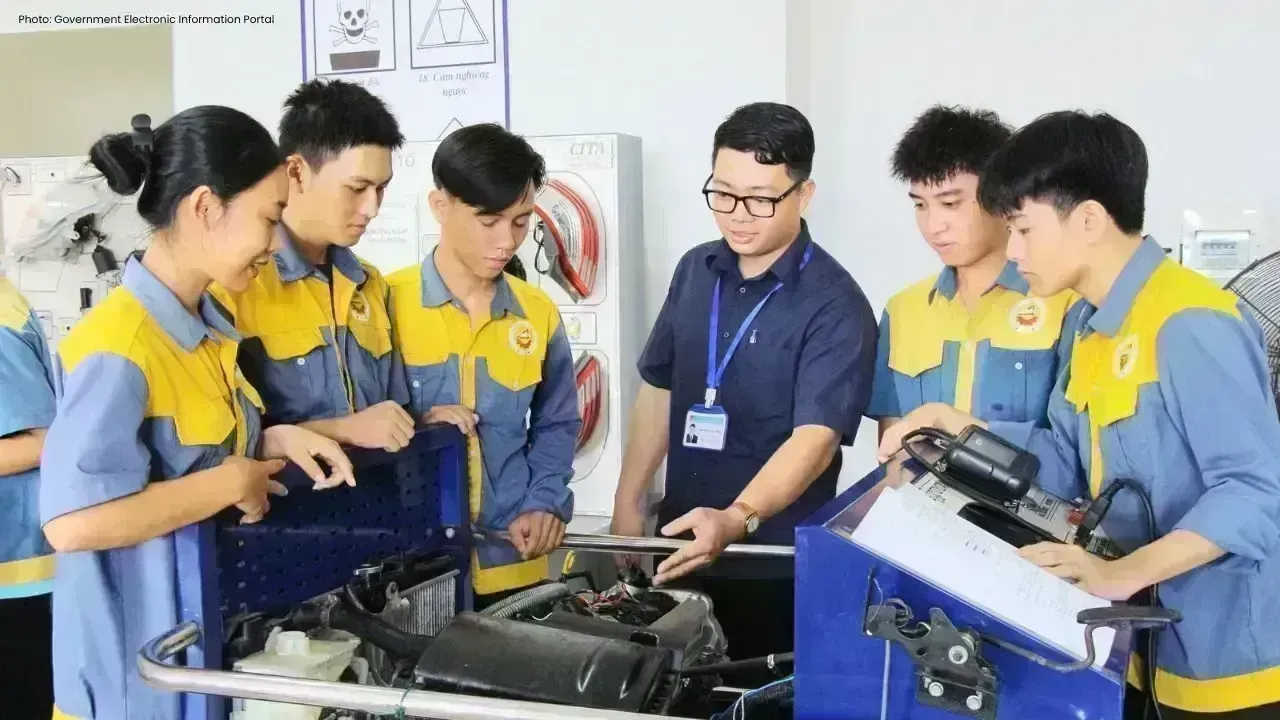
Vietnam is moving toward a major reform of its vocational education system with a proposal to introduce a unified set of regulations governing training, examinations, assessments, and graduation recognition across all vocational education levels. The initiative is being drafted by the Ministry of Education and Training as part of efforts to modernize and streamline the country's workforce development framework.
The proposed circular is based on the 2025 Vocational Education Law and is expected to replace five separate regulations currently governing various aspects of vocational education. These include rules for intermediate and advanced training, continuing education, distance learning, and academic records management. The new framework will also include provisions for vocational secondary education and specialized training programs.
Officials say the unified regulation will simplify administration and reduce overlaps within the vocational education system. Training institutions will operate under a common set of standards while maintaining flexibility to design programs and internal policies suited to their specific educational goals and industry requirements.
One of the most significant changes proposed is the expansion of learning formats. In addition to traditional classroom instruction, students will be able to access online learning, distance education, and blended learning models that combine digital and in-person teaching. This approach is expected to provide learners with greater flexibility and wider access to vocational training opportunities.
The draft also introduces a system for recognizing previously acquired knowledge, skills, and professional competencies. Students may receive exemptions or credit transfers for subjects if they can demonstrate equivalent qualifications gained through work experience, self-learning, or professional certifications. This would help learners avoid repeating content they have already mastered.
Another key feature is the stronger involvement of businesses in vocational education. Students will gain practical experience through workplace-based learning programs where companies actively participate in training, mentoring, and evaluating learners. The move is designed to bridge the gap between education and labor market needs while improving graduates’ job readiness.
The Ministry believes these reforms will enhance transparency, improve training quality, and create a more responsive vocational education system. Public feedback on the draft circular is currently being collected through the Ministry’s online portal before the regulations are finalized and implemented nationwide.










PM Modi Pays Tribute to Mahatma Gandhi, Urges People to Support Khadi
PM Modi pays tribute to Mahatma Gandhi on Gandhi Jayanti and urges citizens to support Khadi and the

Amazon Seeks to Offload $8 Billion in Nvidia Chips to Investors
Amazon plans to move $8 billion in Nvidia chips to investors, using a new financing model to strengt

Samsung Raises Galaxy S26 Prices as Memory Chip Costs Rise
Samsung raises Galaxy S26 prices in South Korea as rising memory chip costs put pressure on smartpho

Lewis Hamilton Calls Singapore Grand Prix One of F1's Toughest Races
Lewis Hamilton discusses the demanding Singapore Grand Prix and brings Plus44 and Almave to Singapor

Denmark's Pandora Opens World's Largest Jewellery Factory in Vietnam
Pandora opens its largest jewellery factory in Vietnam, expanding global production, strengthening s

Gautam Gambhir Questions Batting-Friendly Pitches After India's Record ODI Chase
Gautam Gambhir questions batting-friendly ODI pitches after India’s record chase, calling for a bett

