
You have not yet added any article to your bookmarks!
Join 10k+ people to get notified about new posts, news and tips.
Do not worry we don't spam!
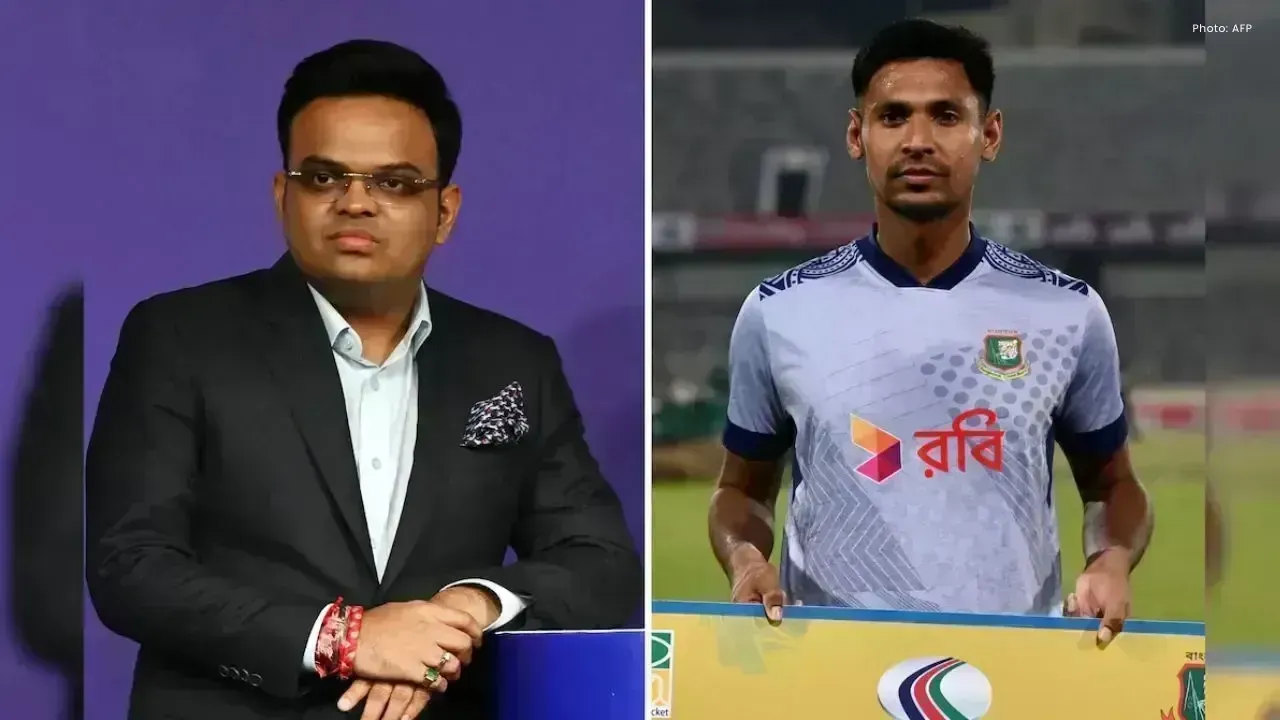
Post by : Saif Rahman
A new visa challenge is intensifying the ongoing dispute between the International Cricket Council (ICC) and Bangladesh in the lead-up to the T20 World Cup 2026. What was intended to be a two-member delegation visit to Dhaka has turned into a solo mission, as an Indian ICC official was reportedly unable to secure a visa in time.
The ICC had aimed to send two senior representatives to Bangladesh to address concerns posed by the Bangladesh Cricket Board (BCB) and Bangladeshi authorities regarding player safety during the upcoming tournament. However, only Andrew Ephgrave, the ICC's Head of Anti-Corruption and Security, reached Dhaka on January 17. His fellow executive, an Indian national, was unable to accompany him due to the visa delay, as reported by local media.
This visit is viewed as a last-ditch effort by the ICC to maintain the T20 World Cup's original timeline, which is set to kick off on February 7. Bangladesh has voiced significant worries about sending its team to India, where several group-stage games are scheduled to take place. The BCB has formally requested the ICC relocate those matches to Sri Lanka, citing security and political concerns.
With the tournament only weeks away, the pressure rests entirely on Ephgrave. As a former British police officer, he is tasked with presenting an in-depth security strategy to assure Bangladesh that its athletes and officials will be fully safeguarded during their time in India. Reports suggest that the plan includes concerted efforts with Indian security forces and exclusive protection for the Bangladesh team throughout their stay.
The visa issue itself stands as a reflection of the strained political relationship between India and Bangladesh. While the ICC has refrained from commenting publicly on the incident, the failure of an Indian official to obtain a visa has drawn attention and underscored the gravity of the situation. It has also complicated discussions that were already both sensitive and pressing.
If negotiations falter, the repercussions could be significant. A stalemate might prompt the ICC to reassess match locations or even delay decisions, creating disruptions before the tournament even commences. Such unpredictability could negatively impact players, fans, broadcasters, and sponsors, all of whom depend on clear arrangements.
As it stands, the likelihood of Bangladesh participating under the current schedule remains uncertain. The outcome of this Dhaka visit may determine whether the T20 World Cup 2026 proceeds as planned or undergoes substantial changes. With time running short, both cricket diplomacy and real-world politics are now intricately intertwined in shaping the tournament's outcome.










PM Modi Pays Tribute to Mahatma Gandhi, Urges People to Support Khadi
PM Modi pays tribute to Mahatma Gandhi on Gandhi Jayanti and urges citizens to support Khadi and the

Amazon Seeks to Offload $8 Billion in Nvidia Chips to Investors
Amazon plans to move $8 billion in Nvidia chips to investors, using a new financing model to strengt

Samsung Raises Galaxy S26 Prices as Memory Chip Costs Rise
Samsung raises Galaxy S26 prices in South Korea as rising memory chip costs put pressure on smartpho

Lewis Hamilton Calls Singapore Grand Prix One of F1's Toughest Races
Lewis Hamilton discusses the demanding Singapore Grand Prix and brings Plus44 and Almave to Singapor

Denmark's Pandora Opens World's Largest Jewellery Factory in Vietnam
Pandora opens its largest jewellery factory in Vietnam, expanding global production, strengthening s

Gautam Gambhir Questions Batting-Friendly Pitches After India's Record ODI Chase
Gautam Gambhir questions batting-friendly ODI pitches after India’s record chase, calling for a bett

