
You have not yet added any article to your bookmarks!
Join 10k+ people to get notified about new posts, news and tips.
Do not worry we don't spam!
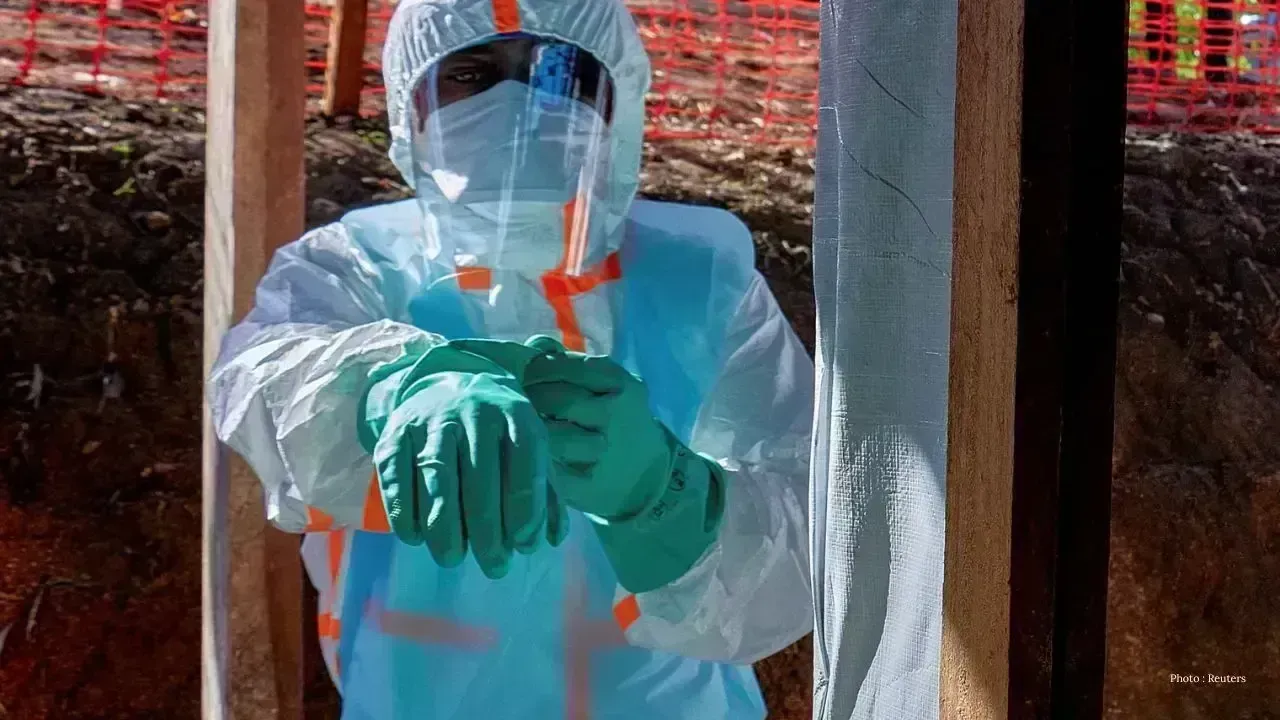
Post by : Shweta
In an urgent plea, the World Health Organization (WHO) seeks deeper community involvement in combating the escalating Ebola outbreak in the Democratic Republic of the Congo (DRC). As health experts face mounting challenges, they emphasize that public participation is critical in curbing the deadly virus that has already impacted numerous individuals.
During a visit to Bunia, Ituri province's capital—currently a focal point of the outbreak—WHO Director-General Dr. Tedros Adhanom Ghebreyesus underscored that collaborative efforts are essential. He stated that halting Ebola is a collective responsibility, necessitating joint action from families, local leaders, healthcare professionals, and authorities. Dr. Tedros remarked that controlling the virus is a community affair, demanding engagement from all sectors of society.
This outbreak is attributed to the Bundibugyo strain of the Ebola virus, a rare variant currently lacking an approved vaccine or targeted treatment. Despite the grim scenario, WHO officials have reassured that early medical intervention can increase survival rates for infected individuals. Dr. Tedros encouraged anyone showing symptoms to promptly seek healthcare rather than delaying, which could worsen their condition.
The response to the outbreak faces significant hurdles, including resistance from certain local populations. Some communities have raised objections to rigorous health protocols concerning burials and the handling of victims. Traditional burial practices hold profound significance for many, yet health officials warn that direct interaction with infected remains can exacerbate transmission risks. Reports indicate that protests against health directives have occasionally escalated into violence against healthcare facilities, thereby jeopardizing the safety of those working to contain the outbreak.
Alarmingly, health authorities report the outbreak has already seen hundreds infected, with many suspected cases still unconfirmed. Deaths linked to the virus continue to rise, and adjacent Uganda has also experienced confirmed cases, which raises concerns about regional health security and the potential for wider dissemination should the outbreak not be swiftly managed.
Amidst these challenges, there are signs of hope. WHO has recently reported several recoveries of Ebola patients who have been successfully discharged, indicating that prompt diagnosis and supportive treatment can improve outcomes even without a dedicated vaccine for this strain. A new treatment facility has been established in Bunia to enhance healthcare access for the affected populations.
The difficult conditions further complicate the outbreak management. Ongoing violence involving armed factions in eastern Congo has obstructed response initiatives and limited accessibility to certain areas. This conflict has displaced numerous individuals, making disease monitoring and contact tracking incredibly challenging. In light of the circumstances, WHO has even called for ceasefires in specific regions, emphasizing that ongoing violence hinders crucial lifesaving efforts.
International support for the outbreak response is growing, with WHO, the International Federation of Red Cross and Red Crescent Societies (IFRC), Médecins Sans Frontières (MSF), and other organizations supplying vital medical equipment, staff training, and emergency healthcare services. WHO has also facilitated the provision of extensive medical resources to bolster local authorities' testing and monitoring capabilities.
Additionally, misinformation represents a significant barrier. False narratives about Ebola, fears of treatment facilities, and skepticism towards health authorities hinder people from seeking critical medical support. Public health officials stress that fostering trust within communities is just as vital as disseminating medications and equipment. They believe that local leaders and community organizations will play an essential role in fostering understanding and cooperation regarding the disease’s transmission risks.
Having declared the outbreak a Public Health Emergency of International Concern, the WHO underscores the gravity of the situation. Surveillance of suspected infections continues, not just within Central Africa, but globally, following investigations of travelers who may have been exposed. While no widespread international transmission has been documented, authorities remain vigilant, enhancing monitoring systems as a precaution.
Currently, WHO officials hold optimism that the outbreak can be managed effectively if communities engage in the response efforts. Their core message emphasizes the need for collaboration between residents, health workers, government entities, and international organizations to safeguard lives and prevent further spread of the disease. Despite notable challenges, health experts believe that strengthening community involvement could be crucial in gaining control over the outbreak.










PM Modi Pays Tribute to Mahatma Gandhi, Urges People to Support Khadi
PM Modi pays tribute to Mahatma Gandhi on Gandhi Jayanti and urges citizens to support Khadi and the

Amazon Seeks to Offload $8 Billion in Nvidia Chips to Investors
Amazon plans to move $8 billion in Nvidia chips to investors, using a new financing model to strengt

Samsung Raises Galaxy S26 Prices as Memory Chip Costs Rise
Samsung raises Galaxy S26 prices in South Korea as rising memory chip costs put pressure on smartpho

Lewis Hamilton Calls Singapore Grand Prix One of F1's Toughest Races
Lewis Hamilton discusses the demanding Singapore Grand Prix and brings Plus44 and Almave to Singapor

Denmark's Pandora Opens World's Largest Jewellery Factory in Vietnam
Pandora opens its largest jewellery factory in Vietnam, expanding global production, strengthening s

Gautam Gambhir Questions Batting-Friendly Pitches After India's Record ODI Chase
Gautam Gambhir questions batting-friendly ODI pitches after India’s record chase, calling for a bett

