
You have not yet added any article to your bookmarks!
Join 10k+ people to get notified about new posts, news and tips.
Do not worry we don't spam!
Post by : Shakul
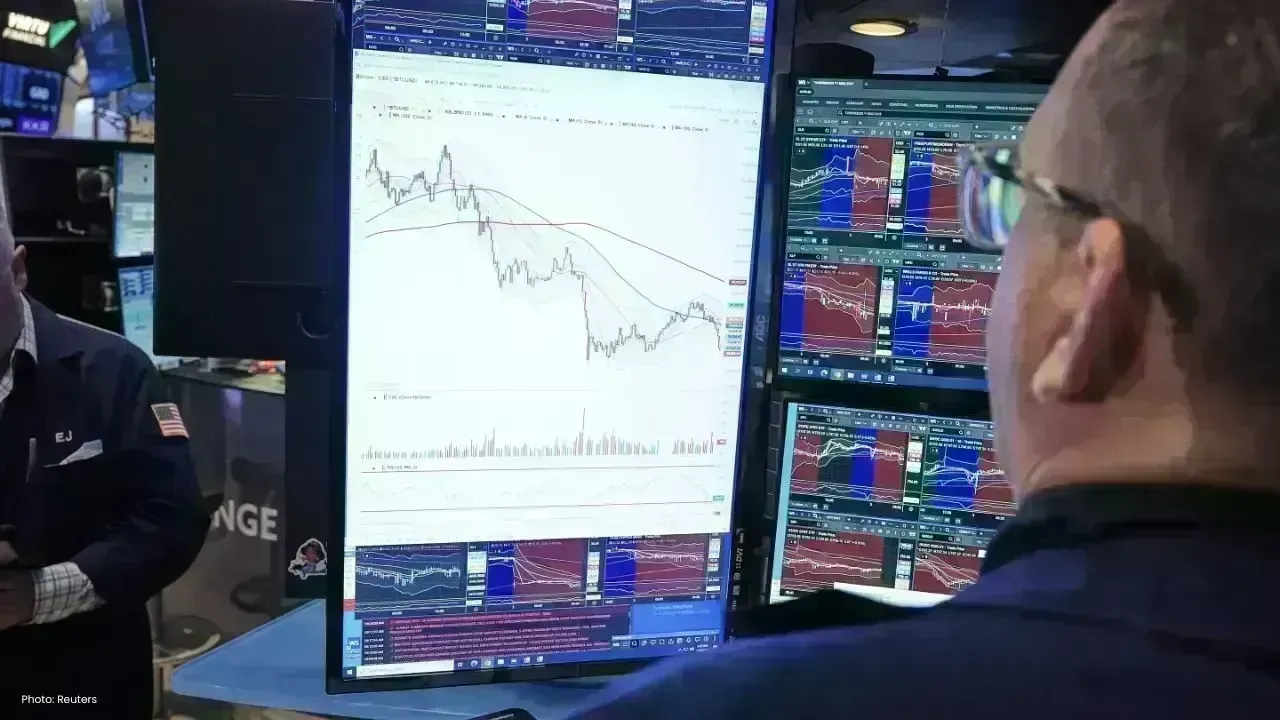
Asian stock markets opened sharply lower on Monday after a major selloff in U.S. technology shares triggered the worst day for Wall Street in several months. Investor sentiment weakened further as expectations for a potential Federal Reserve interest rate hike increased following stronger-than-expected U.S. employment data.
Japan’s benchmark Nikkei 225 plunged 4.5 percent to 63,604.15, leading losses across the region. Although Japan revised its first-quarter annualized economic growth rate downward from 2.1 percent to 1.8 percent, the index remains significantly higher than levels recorded five years ago. The decline reflected growing concerns about global economic conditions and elevated market valuations.
South Korea’s Kospi suffered one of the steepest declines in Asia, falling 8.2 percent as major technology companies faced intense selling pressure. Samsung Electronics dropped nearly 10 percent, while chipmaker SK Hynix also recorded substantial losses. Taiwan’s Taiex fell 3.5 percent, while Hong Kong’s Hang Seng Index and China’s Shanghai Composite both ended lower amid widespread market weakness.
Market volatility intensified after renewed geopolitical tensions in the Middle East pushed crude oil prices sharply higher. Brent crude surged above $97 per barrel, while U.S. benchmark crude climbed close to $95 per barrel following reports of fresh Israeli airstrikes targeting areas in Iran. Investors fear prolonged regional instability could disrupt energy supplies and fuel inflationary pressures worldwide.
The selloff followed Wall Street’s worst performance since October, with the S&P 500 dropping 2.6 percent and the technology-heavy Nasdaq plunging 4.2 percent. Investors reassessed the outlook for interest rates after U.S. labor market data showed the economy added 172,000 jobs in May, significantly exceeding market expectations and signaling continued economic resilience.
The stronger jobs report prompted traders to increase bets that the Federal Reserve may raise interest rates later this year. Rising Treasury yields reflected these expectations, with bond markets pricing in a higher probability of tighter monetary policy. Analysts noted that persistent inflation risks linked to energy prices could further influence the Fed’s decision-making process.
Currency markets remained relatively stable despite the turbulence. The U.S. dollar hovered near ¥160 against the Japanese yen, while the euro traded slightly higher against the dollar. Investors will now closely monitor upcoming economic data, central bank signals, and developments in the Middle East for further direction in global financial markets.










PM Modi Pays Tribute to Mahatma Gandhi, Urges People to Support Khadi
PM Modi pays tribute to Mahatma Gandhi on Gandhi Jayanti and urges citizens to support Khadi and the

Amazon Seeks to Offload $8 Billion in Nvidia Chips to Investors
Amazon plans to move $8 billion in Nvidia chips to investors, using a new financing model to strengt

Samsung Raises Galaxy S26 Prices as Memory Chip Costs Rise
Samsung raises Galaxy S26 prices in South Korea as rising memory chip costs put pressure on smartpho

Lewis Hamilton Calls Singapore Grand Prix One of F1's Toughest Races
Lewis Hamilton discusses the demanding Singapore Grand Prix and brings Plus44 and Almave to Singapor

Denmark's Pandora Opens World's Largest Jewellery Factory in Vietnam
Pandora opens its largest jewellery factory in Vietnam, expanding global production, strengthening s

Gautam Gambhir Questions Batting-Friendly Pitches After India's Record ODI Chase
Gautam Gambhir questions batting-friendly ODI pitches after India’s record chase, calling for a bett

