You have not yet added any article to your bookmarks!
Join 10k+ people to get notified about new posts, news and tips.
Do not worry we don't spam!
Post by : Badri Ariffin
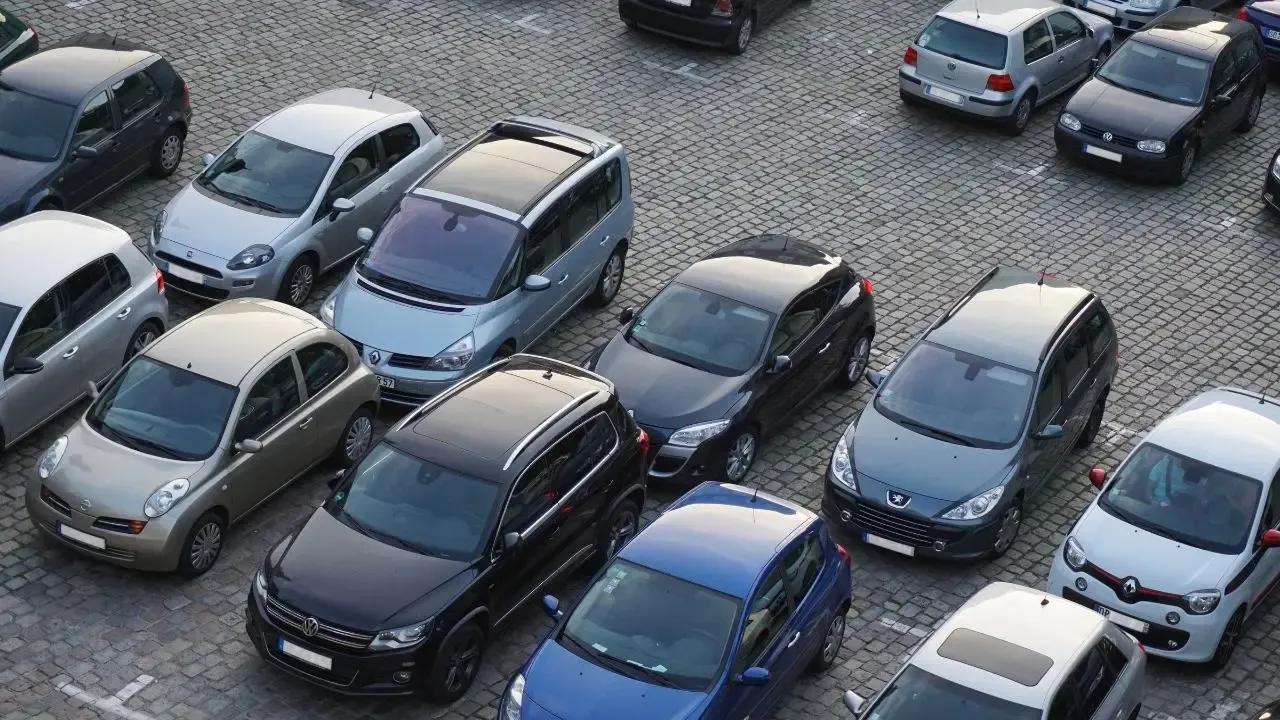
Thailand’s Finance Ministry is preparing a major overhaul of vehicle excise taxes to encourage genuine automobile production in the country and strengthen the domestic automotive industry.
Under the proposed system, automakers that establish production facilities in Thailand and use locally manufactured materials or components could receive lower excise tax rates. In contrast, companies that import fully built-up (CBU) vehicles for sale without investing in Thai production would face higher taxes.
The Finance Ministry has instructed Permanent Secretary Lavaron Sangsnit and Excise Department Director-General Pornchai Thiraveja to complete the proposed tax structure by September 2026. The new rules would be introduced through a ministerial regulation under the Excise Tax Act and could take effect later this year after Cabinet approval.
Thailand introduced its current vehicle excise-tax structure on January 1, 2026, mainly to continue supporting the growth of electric vehicles (EVs).
The latest review has a broader focus. The government now wants to balance EV growth with the interests of Thai vehicle manufacturers, parts suppliers, workers and the wider automotive supply chain.
EVs remained a relatively small part of Thailand’s vehicle market until MG introduced the ZS EV in 2019 at a more accessible price. Although the model was still more expensive than similar internal-combustion engine vehicles, it helped increase consumer interest in EVs.
The market expanded further as more international brands entered Thailand and government incentives, including the EV 3.0 programme, encouraged consumers to switch to electric vehicles.
EV sales reached around 120,000 units in 2025 and could approach 200,000 units in 2026. During the first half of 2026, EV sales increased by 93% to approximately 105,000 vehicles.
Thailand’s overall automobile market has also started to recover after several years of contraction. Total vehicle sales increased by 14% during the first half of 2026 to around 346,000 units.
However, industry representatives say the recovery has not benefited all parts of Thailand’s automotive sector equally.
EVs accounted for about 30% of total vehicle sales during the first half of 2026. More than half of those EVs were imported, meaning a significant portion of the growth provided limited support to local manufacturing and parts suppliers.
Rising and volatile oil prices, along with a price war involving more than 20 EV brands, have also helped drive consumer demand for electric vehicles.
Thailand’s EV support system has also changed. The EV 3.0 programme, which offered subsidies of up to 150,000 baht, has ended. It has been replaced by EV 3.5, which provides support of up to 50,000 baht.
Automotive industry representatives say a major challenge remains the 0% customs duty available to Chinese vehicles under the ASEAN-China Free Trade Agreement.
The arrangement allows some manufacturers to sell imported EVs in Thailand without committing to full vehicle production or completely knocked-down (CKD) assembly operations in the country.
Imported EVs currently face a 10% excise tax, while vehicles assembled locally can qualify for a rate of 2%.
Industry representatives argue that the eight-percentage-point difference is not enough to encourage investment in Thai manufacturing. They estimate that large-scale Chinese production, combined with access to raw materials and established supply chains, gives Chinese manufacturers a 30–40% production-cost advantage over Thailand.
Thailand’s established automotive industry has warned that continued dependence on imported EVs could weaken domestic vehicle production and the country’s parts supply chain.
The automotive sector employs more than 800,000 people across Thailand, making the issue important for both manufacturing and employment.
Ten automotive associations, the Thai Automotive Industry Association and the Federation of Thai Industries’ Automotive Industry Club are among the groups calling for changes to the current tax structure.
Suphakorn Rattanawaraha, executive vice-president of Toyota Motor Thailand, highlighted the industry’s concerns in a personal Facebook post, writing: “We lost Suzuki, but gained Neta.”
He later argued that some imported EVs and locally assembled vehicles qualify for the 2% excise rate despite involving only limited assembly work, such as fastening screws and using adhesive.
Suphakorn estimated that the current arrangements cost Thailand tens of billions of baht each year. He also pointed out that Toyota pays at least 20 billion baht annually in excise tax.
He called for an immediate increase in excise taxes on imported EVs, saying a higher rate would create a clearer distinction between companies investing in Thailand and those mainly relying on imports.
Sarote Maartlert, vice-president of Mitsubishi Motors Thailand, said automakers, industry associations and parts manufacturers had discussed the issue with the government.
According to Sarote, the government has responded positively and understands the need to balance EV market growth with the long-term interests of Thailand’s automotive manufacturing sector.
He said the proposed changes could ultimately benefit consumers while also addressing concerns about market development and government revenue.
Honda Automobile (Thailand) president and CEO Koji Iwanami has also urged the Thai government to review vehicle import duties.
He suggested that duties on vehicles imported from Japan should either be reduced or brought closer to the rates applied to EVs imported from other countries.
Honda is considering bringing several Japanese models to Thailand, but high import duties make it difficult to price those vehicles competitively.
At the same time, EVs and range-extended electric vehicles (REEVs) from some countries can enter Thailand without import duties, creating a significant difference in market conditions.
Chinese EV manufacturer XPeng is also monitoring Thailand’s proposed tax changes.
James Wu, vice-president of XPeng, said the company was aware of discussions surrounding the planned excise-tax restructuring and was preparing for the possibility of higher taxes on imported EVs.
XPeng began studying the possibility of establishing a production facility in Thailand around six months ago. However, the company’s final investment decision will depend on the tax rates and incentives eventually announced by the Thai government.
Wu said Thailand remains one of XPeng’s core markets and that the company is prepared to adapt to any new regulations.
If XPeng establishes a factory in Thailand, the company could also use the country as a base to explore opportunities across the wider ASEAN region.
XPeng currently assembles its G6 and X9 models in Indonesia. The company has sold around 4,000 vehicles there, compared with more than 10,000 cumulative sales in Thailand.
Its newly launched L03, priced between 899,000 baht and 1.2 million baht, is aimed at expanding XPeng’s customer base, particularly among younger buyers.
Deputy Prime Minister and Finance Minister Ekniti Nitithanprapas said lower vehicle excise tax rates would be reserved for companies that establish genuine production operations in Thailand and meet local-content requirements.
The proposed benefits would be available to both existing and new manufacturers producing internal-combustion engine vehicles, plug-in hybrid electric vehicles and EVs.
Eligible companies would need to:
Companies that continue importing CBU vehicles without investing in Thai production would face higher excise tax rates.
The government says the distinction is designed to prevent domestic manufacturers from being placed at a disadvantage while attracting new manufacturing investment to Thailand.
The Finance Ministry expects to complete its review by September 2026 and submit the proposal to the Cabinet for consideration.
Finance Minister Ekniti said concerns about a possible decline in tax revenue may be overstated.
Under the proposed structure, consumers choosing imported vehicles would pay higher taxes, while vehicles produced domestically would continue to benefit from lower rates.
The government expects the policy to encourage manufacturers to invest in Thailand, protect jobs, strengthen local parts suppliers and potentially increase government revenue.
The policy could therefore support both Thailand’s EV transition and its wider automotive manufacturing ecosystem.
Danucha Pichayanan, secretary-general of the National Economic and Social Development Council, said Thailand still has a major advantage because of its deep automotive relationship with Japan.
Thailand and Japan have developed an integrated automotive supply chain over more than three decades. The ecosystem includes everything from basic components to advanced automotive technologies.
Danucha said this established production network would make it difficult for other countries, including Indonesia, to persuade major manufacturers such as Toyota to relocate significant production capacity.
Automakers considering a production shift must evaluate supply-chain readiness, manufacturing costs and long-term production stability.
He expressed confidence that Thailand would remain an important and efficient automotive production base for Japanese manufacturers in the ASEAN region.
Despite the government’s efforts to attract investment and support EV growth, Thailand’s automotive industry continues to face challenges.
In the second quarter of 2026, the value of passenger-car exports using conventional internal-combustion technology fell by 42.4%.
The proposed vehicle excise-tax overhaul therefore represents a broader attempt by Thailand to reshape its automotive policy. The government is seeking to support EV adoption while ensuring that rising vehicle sales also create jobs, strengthen local suppliers, encourage factory investment and generate economic value inside Thailand.
If approved, the new tax structure could significantly change the competitive environment for imported and locally manufactured vehicles in Thailand later in 2026.






Lamborghini Catches Fire on Singapore's ECP, Causing Heavy Traffic
A Lamborghini caught fire on Singapore's ECP, causing heavy traffic and bus delays. No injuries were

Bangkok Airport Duty-Free Area Flooded by Pipe Burst
A burst water pipe flooded the duty-free shopping area at Bangkok's Suvarnabhumi Airport on July 16,
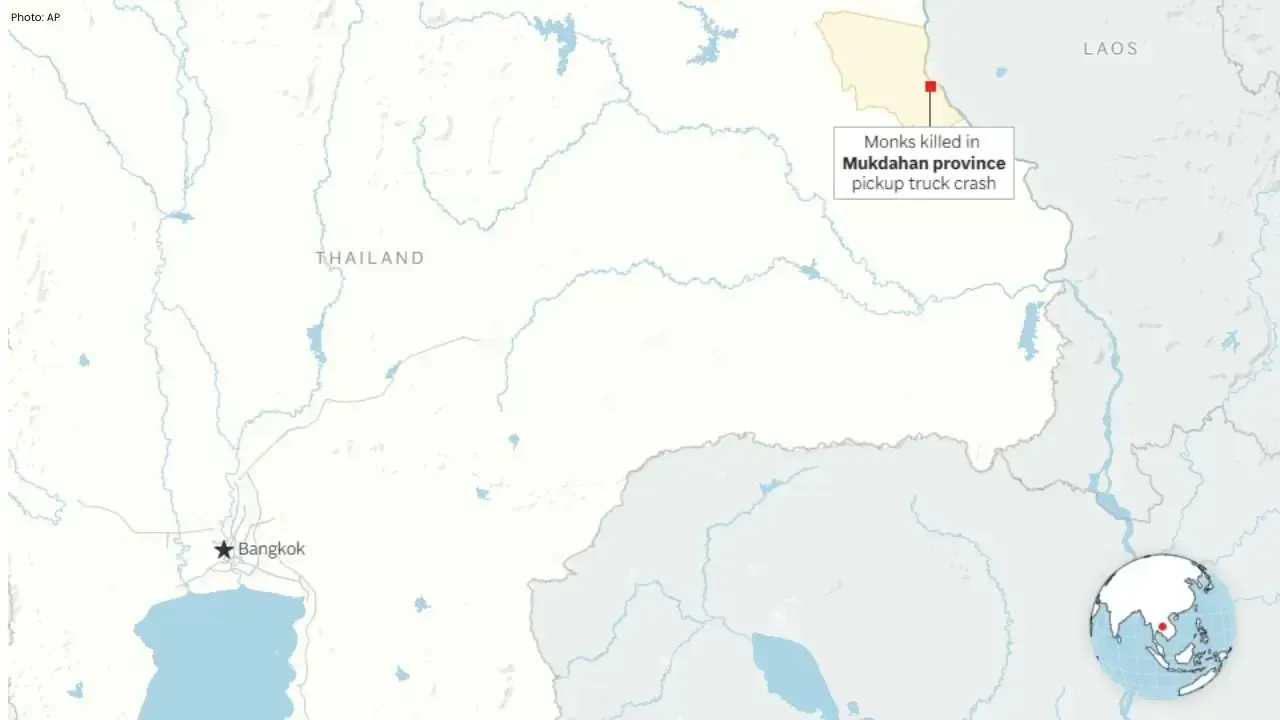
Nine Monks Killed in Thailand Pickup Truck Tragedy
An 11-year-old boy driving a pickup truck crashed into monks during a pilgrimage in northeastern Tha
Anwar Congratulates Xi on CPC's 105th Anniversary
Malaysia reaffirms strong ties with China as PM Anwar Ibrahim sends a congratulatory letter to Presi
Thai Agriculture Team Reviews 2026 Farm Development Plans
Agriculture Ministry officials inspected livestock and organic rice projects in Nakhon Sawan to moni

Thailand, Canada Boost Ties in PM-Level Phone Talks
Thailand and Canada agreed to strengthen trade, security, OECD cooperation and ASEAN-Canada FTA talk